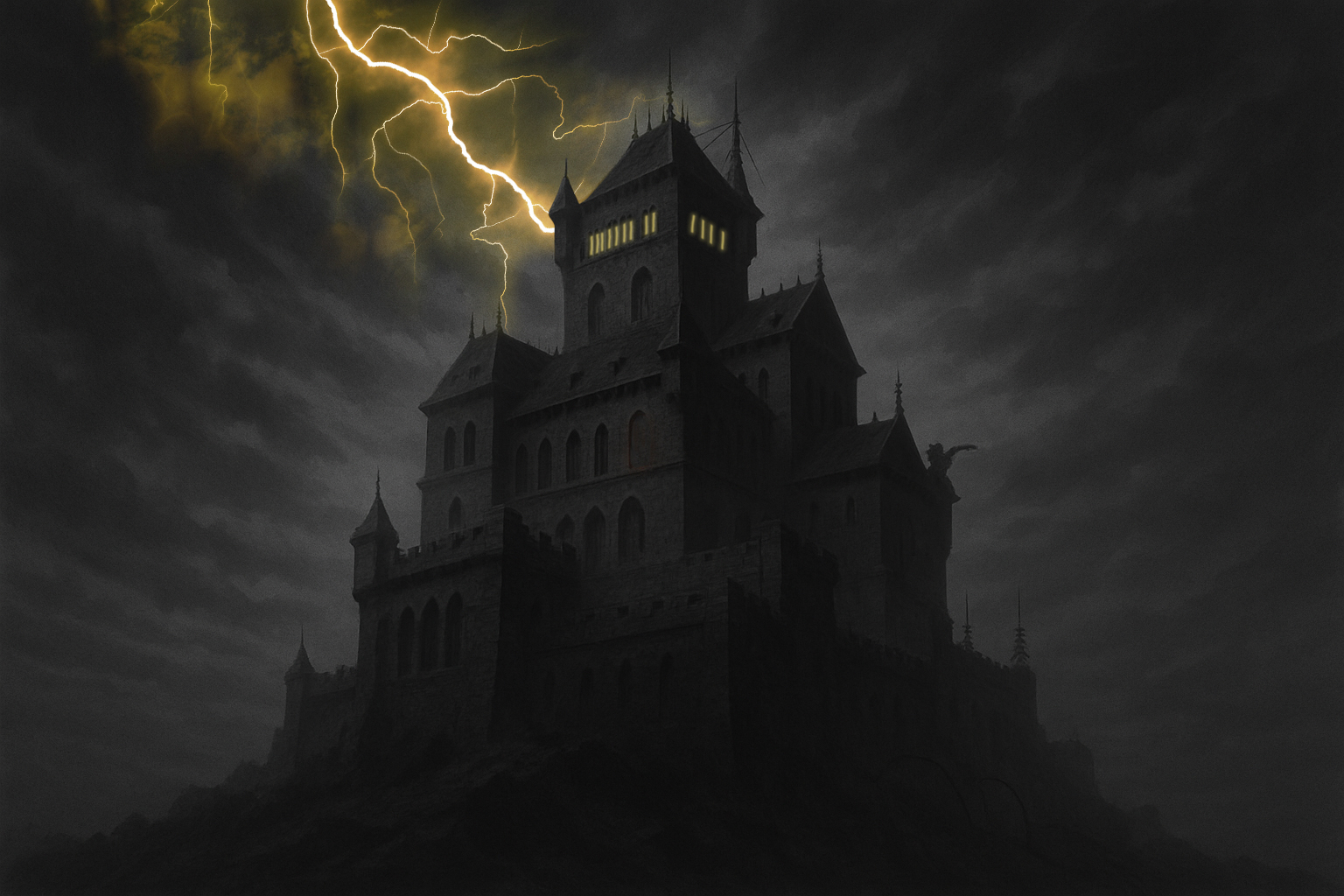
Learning Through Exploration
The Castle is a narrative-driven VR learning experience where students restore damaged systems, investigate environmental clues, and solve escape-room-inspired challenges using electrical theory, observation, and experimentation.
Rather than separating instruction from interaction, concepts are embedded directly into the environment, allowing learners to progress through guided discovery and practical application.
Why Immersive Learning Matters
Many learners struggle to connect abstract theory to meaningful application. The Castle approaches this challenge by transforming concepts into interactive systems that respond directly to player actions, experimentation, and problem-solving decisions.
The Castle is designed to support existing educational instruction by giving learners opportunities to apply concepts through interaction, experimentation, and guided discovery inside an immersive environment.
Students are encouraged to investigate, test, measure, compare, and restore systems while progressing through a persistent story-driven environment.
Structured Educational Progression
The Castle is organized into a four-level progression system designed to gradually expand learner understanding from foundational electrical concepts through increasingly advanced applications and troubleshooting scenarios.
Each room reinforces concepts through interaction, environmental storytelling, guided experimentation, and structured progression.
Discovery Has a History
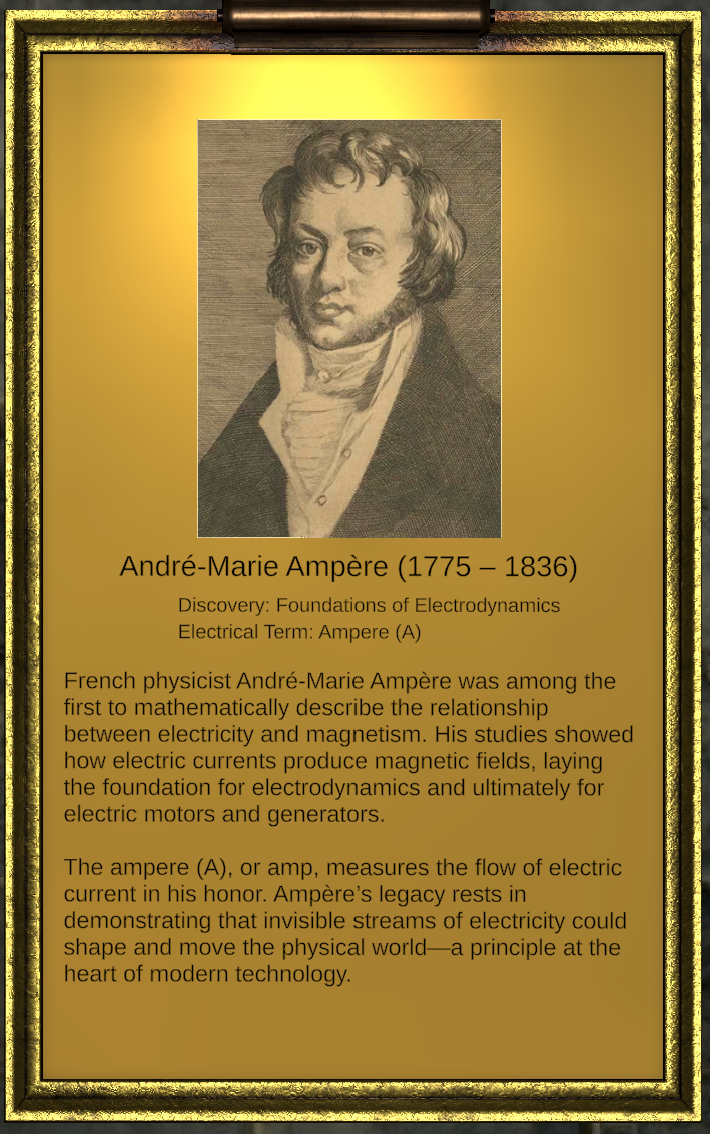
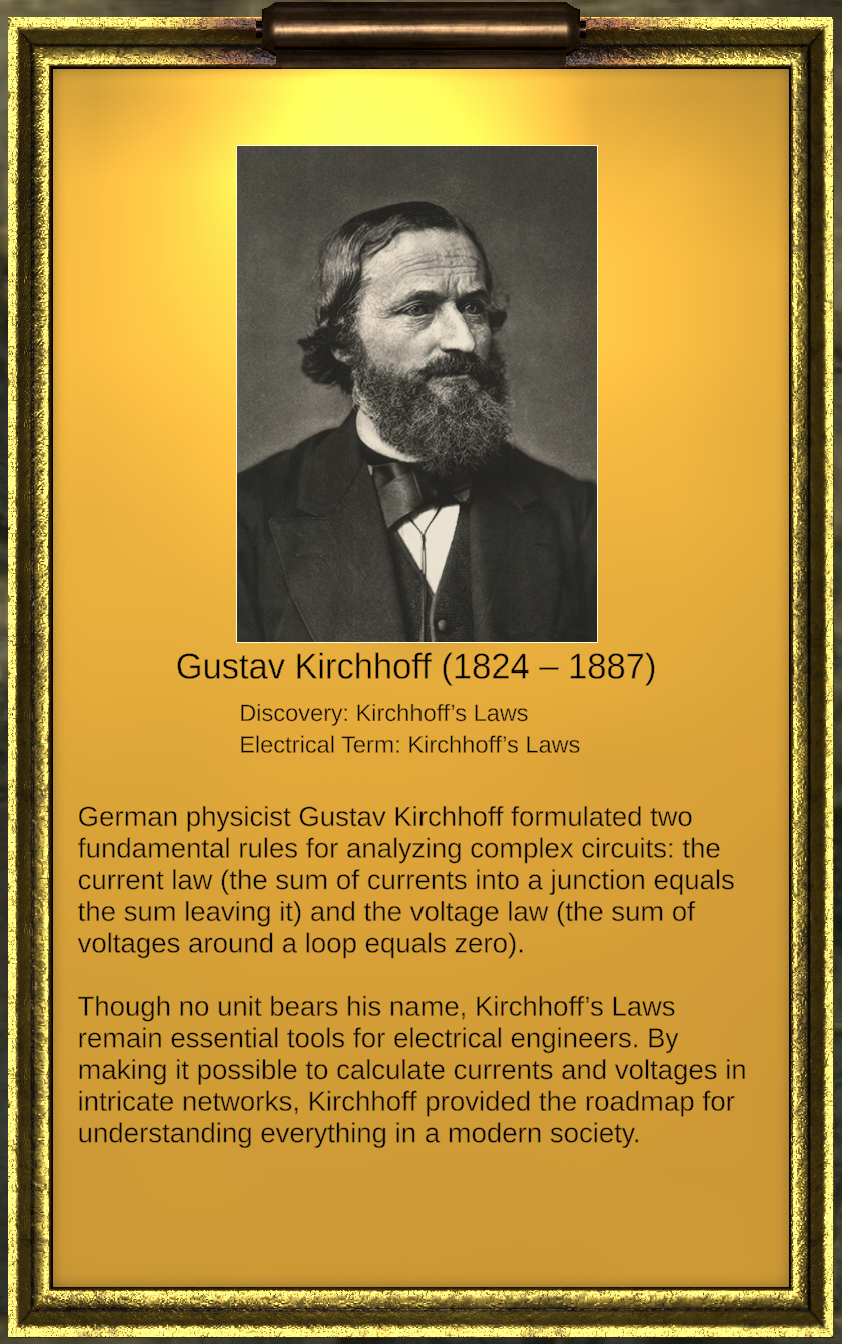
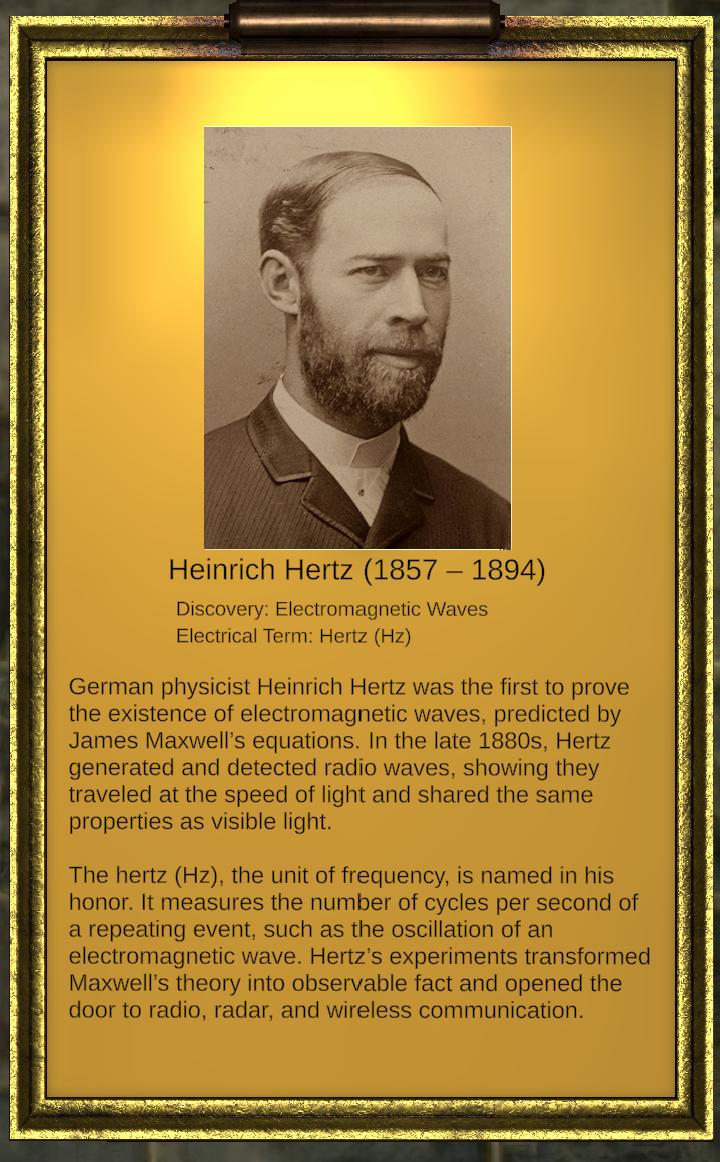
Portraits and environmental storytelling throughout the Castle introduce learners to contributors whose discoveries shaped the modern understanding of electricity, engineering, and scientific experimentation.
Optional Physical Learning Systems
Academic programs may additionally choose to incorporate optional physical learning systems designed to reinforce hands-on electrical concepts alongside the VR experience.
These systems are intended to help learners connect virtual interaction with real-world measurement, troubleshooting, and experimentation practices.
Educational Alignment
The Castle is designed to support applied learning pathways related to electrical systems, troubleshooting, engineering technology, technical education, and experiential STEAM learning initiatives.
The project structure supports classroom integration, guided exploration, and long-term expansion opportunities across multiple educational environments.
CIP Alignment
The Castle supports experiential learning pathways associated with multiple National Classification of Instructional Programs (CIP) categories related to electrical systems, engineering technology, troubleshooting, electronics, and applied scientific learning.
15.0303 - Electrical, Electronic, and Communications Engineering Technology/Technician
Electrical circuitry, prototype development and testing,
systems analysis, instrumentation, maintenance, and testing.
15.0403 - Electromechanical Engineering Technology/Technician
Prototype testing, manufacturing systems, operational testing,
maintenance procedures, and systems analysis.
47.0101 - Electrical and Electronics Installers and Repairers, General
Electrical circuitry, testing equipment, machine systems,
and maintenance-related troubleshooting practices.
46.0302 - Electric Power and Transmission Installers
Electrical systems, power transmission, inspection,
troubleshooting, and safety-related practices.
14.1001 - Electrical and Electronics Engineering
Scientific and mathematical principles applied to electrical
and electronic systems and their components.
14.0901 - Computer Engineering
Design, development, and operational evaluation of computer
hardware and related technical systems.